
Okay, so check this out—tracking a SOL transaction can feel like detective work. Wow! It can be messy. Medium-level explanation: you start with a signature, then you chase confirmations, logs, and balances. Longer thought: and because Solana moves fast and programs can call other programs, one transaction often contains a nested story of token moves, rent charges, compute-unit consumption, and side-effects that only show up if you know where to look and how to read the clues.
Seriously? Transactions sometimes look opaque. Hmm… My instinct says it’s a visibility problem more than a chain problem. Initially you might think a “confirmed” tag is all you need, but then you realize that “finalized” matters when funds must be absolutely safe. Actually, wait—let me rephrase that: on one hand, confirmed is quick and usually fine; on the other hand, finalized is the state you want for irreversible bookkeeping, though most UI tools show both and you have to pick what you trust.
Here’s what bugs me about explorers. Short answer: inconsistency. Medium: different explorers name fields differently or hide inner instructions by default. Longer: that inconsistency forces users to hop between tools, or to dive into raw RPC calls when they need precision—so knowing how to read what’s shown makes the difference between fumbling and actually diagnosing a failed transfer.
Where to start — transaction basics and what each field means (useful for debugging)
Start with the transaction signature. Wow! It’s the unique ID. Medium: paste it into an explorer to see the overall status, slot, block time, and fee payer. Longer thought: the signature ties to the whole execution tree—so when you expand inner instructions you see CPI (cross-program invocation) chains that reveal exactly which program did what, and why balances changed.
Look at signatures and confirmations first. Short: confirmed vs finalized. Medium: many explorers show a “confirmed” state almost immediately and “finalized” later after additional confirmations. Longer: if you’re reconciling accounting records or monitoring a bridge or exchange, treat finalized as the true source of truth; for UX and quick checks, confirmed is usually fine but be mindful of very rare reorgs.
Check the fee payer and fee amount. Wow! Fees explain some balance drops. Medium: Solana fees are not huge, but they matter for microtransactions and for users who create many accounts. Longer: fee breakdowns sometimes include rent-exempt amounts, lamports moved to create accounts, and computational budget extensions, which can be critical when a transaction fails for out-of-compute or insufficient balance reasons.
Open logs. Really? Yes. Logs tell you why a program emitted an error or succeeded. Medium: program logs include standard messages and any custom messages the program emits. Longer: if a transaction fails silently, the log often contains a stack of messages (from parent program to child programs) that make it clear whether it was a signature failure, account mismatch, or a program-specific assert.
Deep dive into pre- and post-balances. Short: balances reveal the net movement. Medium: seeing pre/post lamports for each account exposes who paid what, and where rent was taken. Longer: for token transfers, remember token accounts (and associated token accounts) change; sometimes SOL is wrapped into WSOL, which looks like a token account move rather than a native SOL transfer.
Token transfers and token accounts confuse a lot of folks. I’m biased, but explorers that decode SPL token instructions win. Short: token decimals matter. Medium: a reported transfer of “1000000” might be 1 token if decimals = 6. Longer: always check the mint info and the token account’s owner—if an account is not an associated token account you might be looking at a nonstandard setup and that can cause failed transfers when programs expect an ATA.
Program interactions and CPIs deserve special notice. Wow! A single transaction can invoke multiple programs. Medium: you’ll see inner instructions when that happens. Longer: tracing a failed swap, for instance, often requires you to inspect multiple CPIs—AMM program calls, token transfers, and fee collections—and to understand which call reverted or returned an error code.
Not finding the transaction? Short: it might not have landed. Medium: if the signature is “not found” check mempool, node health, or whether the client used an ephemeral blockhash that expired. Longer: sometimes wallets resubmit, and you get duplicate signatures or partial executions—watch for “already processed” messages or duplicates in the block explorer.
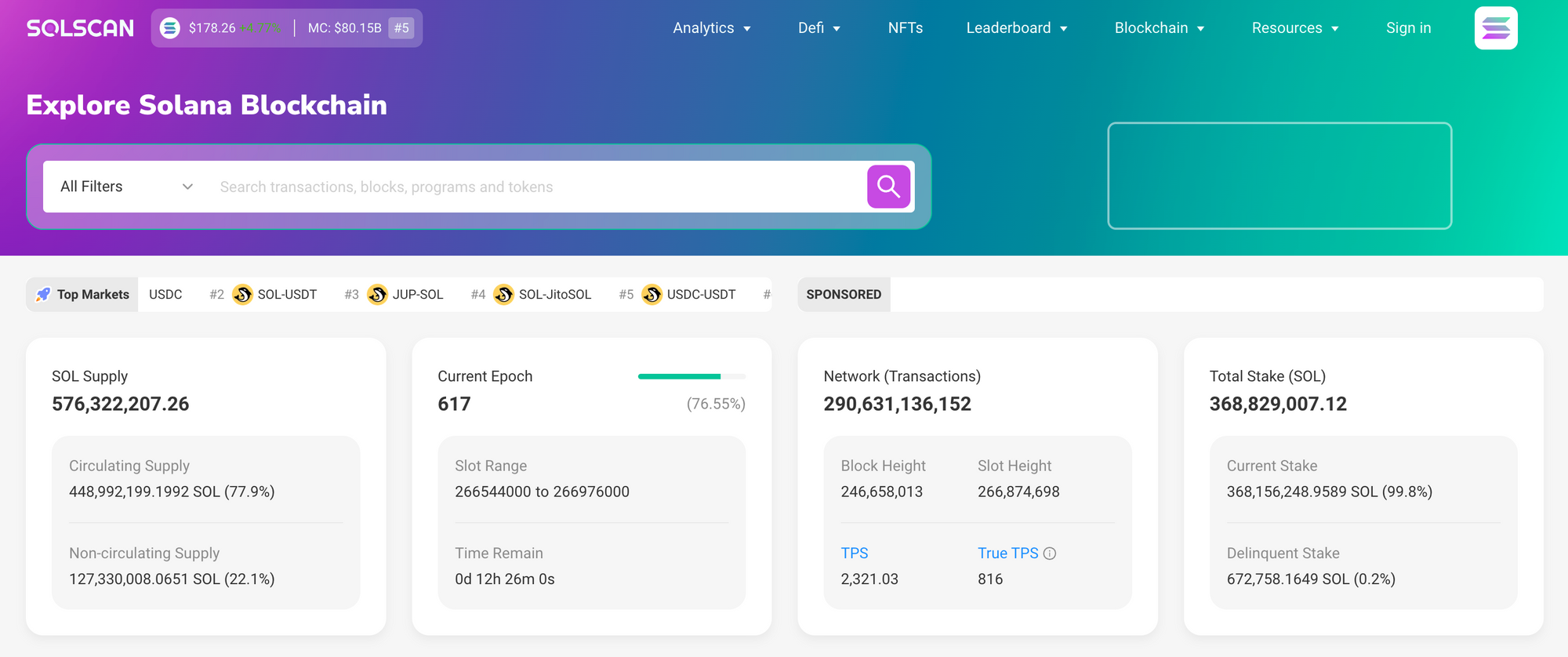
Want a single tool recommendation? Try solscan for a solid mix of usability and deep decoding. Really? Yes. It decodes SPL transfers, shows inner instructions, and surfaces token metadata in ways that help fast troubleshooting. You can explore it here: solscan
Pro tips for power users. Short: use RPC and CLI when needed. Medium: explorers are great, but programmatic checks via getTransaction or getConfirmedTransaction give you raw RPC output. Longer: if you’re automating reconciliation or watchlists, parsing JSON with pre/post balances, logs, and innerInstructions is far more reliable than screen-scraping UI fields, especially because some UIs hide edge-case details.
Stuck transactions and retries. Okay, here’s a human quirk: people often resend the same txn and confuse themselves. Short: duplicate signatures won’t replay. Medium: if a tx seems stuck, check recent blockhash expiry or fee-payer balance. Longer: sometimes the right fix is to increment the blockhash or use a different fee-payer and then resubmit—yet this requires careful signing and nonce handling to avoid double-spend attempts.
FAQ — quick answers to common questions
What does “inner instruction” mean?
An inner instruction is a sub-call made by a program to another program during the same transaction. Short: think of it as a nested function call. Medium: they show how token swaps, fee collections, and secondary transfers happen inside a primary instruction. Longer: inner instructions are essential for understanding complex transactions, and most good explorers will let you expand them to see exact account changes and token movements.
Why is a transaction “confirmed” but not visible to my wallet?
Often because wallets rely on a specific confirmation threshold or because the wallet caches state. Short: confirmed isn’t finalized. Medium: your wallet might wait for finalized to update balances or might require a separate indexer update. Longer: if funds appear missing after confirmed, wait for finalization, check the explorer logs, and confirm that the associated token accounts were created and funded as expected.
